Why Most Beginners Fail at Investing — And How to Avoid It
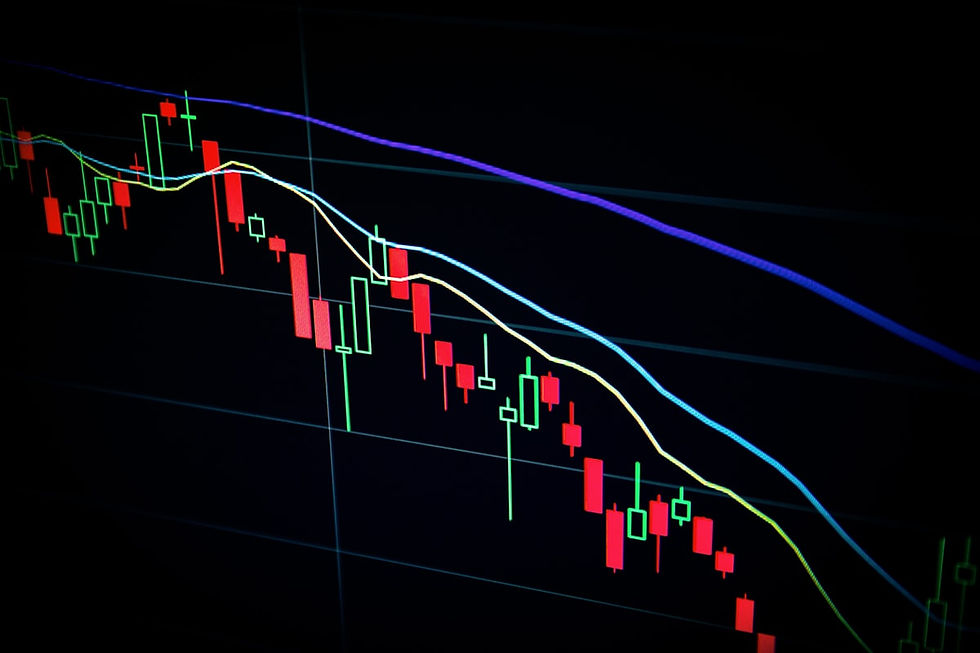
Most people who start investing don't last. They open a brokerage account, make some trades, experience either immediate losses or disappointingly slow gains, and quietly disengage. Some pivot to more speculative strategies. Some give up entirely. A small minority develops genuine skill and builds real wealth.
The gap between the two groups is not intelligence. It's not access to information. It's not even luck, at least not primarily. It's a small set of predictable, avoidable mistakes that most beginners make and that almost no one explains honestly in advance.
This is that honest explanation.
Failure Mode 1: No Framework, Just Vibes
The most common reason beginners fail is that they never develop a framework for making investment decisions. Instead, they make decisions based on tips from friends, articles they've read, stocks they've heard about, feelings about companies they like, or price movements that look like momentum.
None of these things is a framework. A framework is a structured, repeatable process for evaluating investments — asking the same questions in the same order, applying consistent criteria, and making decisions based on analysis rather than instinct or anecdote.
Without a framework, every investment decision is made from scratch, and the decision is heavily influenced by whatever emotional state you're in at the time. Warren Buffett has said that the most important quality for an investor is temperament, not intellect — but temperament is only stabilising when it's anchored by a clear process. Without the process, even good temperament can't save you from reactive decisions.
The Gingernomics beginner track is the curriculum for building a genuine framework. It's not optional preparation for "real" investing — it is the investing.
Failure Mode 2: Expecting Fast Results from a Slow Process
Compounding is a long-range weapon. In the first few years of a patient, disciplined investment approach, the results are often unimpressive — modest gains, occasional losses, no dramatic moments. This is exactly what it's supposed to feel like.
But most beginners come to investing with expectations shaped by social media, where investing success stories are dramatic and quick. When their own results look nothing like those stories, they conclude that their approach isn't working and change it — often abandoning the slow, disciplined path for something more exciting and less evidence-based.
The irony is that the boring, consistent approach they abandoned is usually the one that produces extraordinary results over a decade. The exciting, active approach they switched to is the one that the Dalbar study repeatedly shows underperforms.
Benjamin Graham's "defensive investor" was designed precisely for people who have limited time or patience for complex analysis — and it produced very respectable results through decades. The problem is not that disciplined investing is slow. The problem is that most beginners have been sold a different story about what investing should feel like.
Failure Mode 3: Confusing Activity With Progress
Trading frequently feels productive. Monitoring prices daily feels engaged. Reading every article about every stock you own feels thorough. But none of these activities directly improve investment outcomes — and several of them actively worsen them.
Each trade incurs a transaction cost and a potential tax event. Each reactive price check creates an opportunity for an emotional, uninformed decision. Each article adds noise that may contradict your original analysis for reasons that have nothing to do with the actual business.
The investor who makes fewer, more deliberate decisions — based on genuine analysis and a clear process — consistently outperforms the active trader in the same period. Morgan Housel calls this "the power of doing nothing." The vast majority of investment activity that most beginners engage in doesn't improve their results. It just makes them feel like they're doing something.
Failure Mode 4: Anchoring to Your Purchase Price
"I can't sell it now — I'd take a loss." This statement is one of the most costly sentences in personal finance.
The price you paid for a stock is completely irrelevant to its future performance. The market doesn't know what you paid. The business doesn't care. The only things that determine whether a stock will go up or down from here are the future performance of the underlying business and the multiple the market assigns to it — neither of which is influenced by your cost basis.
The psychological trap — known as "loss aversion" in behavioural finance — causes investors to hold losing positions long after the thesis has broken, waiting to "get back to even" before selling. This leads to holding deteriorating businesses while the rest of your capital sits unproductively in a losing position.
The correct question is never "am I up or down?" It's "is my thesis still intact, and is this the best use of this capital?" If the answer to either is no, the prior price is irrelevant.
Failure Mode 5: No Clear Sell Rules
Most investment frameworks are good at answering "when to buy." Almost none are equally good at answering "when to sell." And so most investors hold positions with no clear exit criteria — staying too long in deteriorating businesses because they never decided in advance what would trigger a sale.
Sell rules should be written at the time of purchase, not decided in the heat of the moment when you're watching a position fall. The rules should be based on thesis integrity (sell if the fundamental reason for owning the business no longer applies), not price (sell if the stock falls X%).
Our investment strategy guide covers the sell decision framework in detail. Writing your sell rules in advance removes the emotional difficulty of making that decision under pressure.
The Path From Here
None of these failure modes is unavoidable. They are all caused by not learning the right things before investing real money — which is what the Gingernomics beginner track exists to address.
The investors who succeed long-term are not those who started with the best instincts. They're those who built good frameworks early, maintained them under pressure, and improved their process systematically over time. Start building the foundation now, before the market tests you. The test is coming regardless — the question is whether you'll be prepared for it.
The content on Gingernomics is for educational and informational purposes only and does not constitute financial advice. Always do your own research and consult a licensed financial advisor before making any investment decisions. Past performance is not indicative of future results.


Comments